Cucurbits are economically important crops that are vulnerable to a wide range of diseases, including many caused by viruses. Most cucurbit-infecting viruses are spread by insect vectors*, such as leafhoppers, whiteflies, and aphids. Aphid-transmitted viruses may be particularly difficult to manage because several that are common where cucurbits are grown can be spread very rapidly. These viruses can cause distortions, mosaic patterns, and yellowing on foliage and reduce flower production. Fruit discoloration and distortion caused by some aphid-transmitted viruses can also reduce marketability.
*Words in bold italics are defined in the glossary at the end of this page.
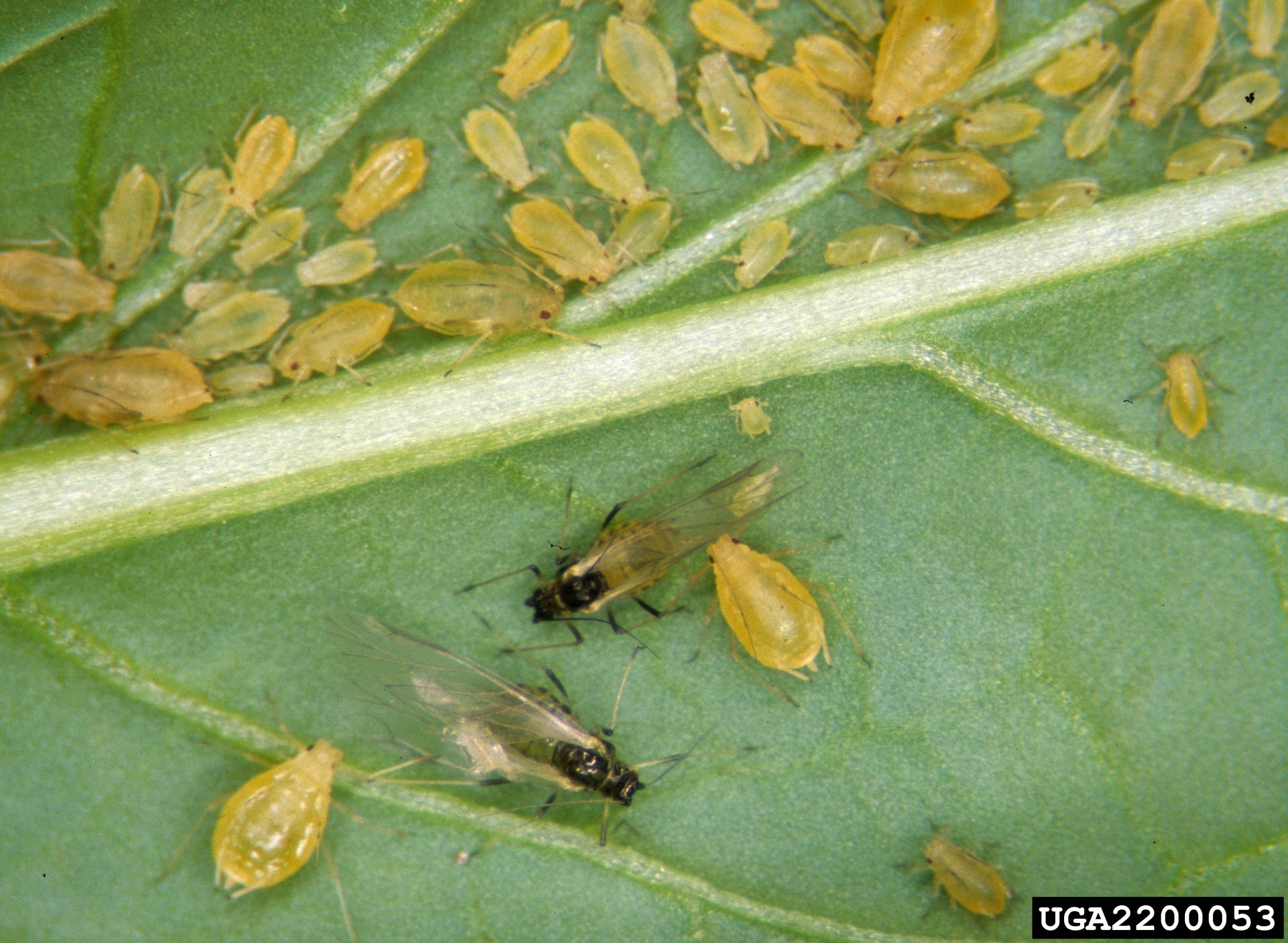
Aphids are small, soft-bodied insects that feed on plants using straw-like mouthparts called stylets. They cause damage directly through feeding and excretion of honeydew, a sugar-containing waste product that is deposited on plant surfaces and supports the growth of sooty mold, and indirectly by transmitting crop-damaging viruses. Aphids give birth to live young, and populations of wingless aphids can rapidly reach very high densities under favorable environmental conditions. Winged (alate) aphids move within fields and can be carried long distances on wind currents. The most common and damaging aphid feeding and reproducing on cucurbit crops (a resident aphid) is the melon aphid (Aphis gossypii; also called cotton aphid) (Figure 1A+B). The green peach aphid (Myzus persicae) is also a resident aphid in cucurbit crops but inflicts less direct damage (Figure 1C+D). There are also many aphids that visit cucurbit crops taking short tastes of the plants to determine their suitability as a food source (probing) without staying to feed and reproduce (Table 1). These transient aphids may still spread viruses in cucurbits even though they do not remain to cause direct damage.
Figure 1. The two most common aphid species found feeding and reproducing on cucurbit crops in the United States.
| Aphid common name (scientific name) | Main plant hosts | Distribution within the U.S. & Seasonality |
|---|---|---|
| Pea aphid (Acyrthosiphon pisum) | Alfalfa, clover, and peas | Cool and warm temperate regions. Largest numbers in late spring/early summer. |
| Cowpea aphid (Aphis craccivora) | Cowpeas, beans, peas, wild legumes, and many others | Warm-temperate and tropical regions. Large numbers align with cowpea or bean production. |
| Black bean aphid (Aphis fabae) | Broad beans, beets, docks, and many others (summer); Euonymus species (winter) | Cool and warm temperate regions. Largest numbers in late spring/early summer. |
| Oleander aphid (Aphis nerii) | Oleander, milkweed | Temperate to warm-temperate regions. Largest numbers in early to mid-summer. |
| Spirea or green citrus aphid (Aphis spiraecola) | Citrus crops (summer); Spiraea (winter) | Warm-temperate and tropical regions. Large numbers align with leaf flush on citrus hosts. |
| Foxglove aphid (Aulacorthum solani) | Potato and many others; Foxgloves (winter) | Temperate to warm-temperate regions, greenhouses. One of the first aphids to appear in spring. |
| Thistle aphid (Brachycaudus cardui) | Wild thistles (spring/summer); Prunus crops (winter) | Temperate regions. Largest numbers in spring after living on thistle weeds. |
| Potato aphid (Macrosiphum euphorbiae) | Potato, lettuce, and beets (summer); Roses (winter) | Cool to warm temperate regions. Largest numbers in late spring/early summer. |
| Corn leaf aphid (Rhopalosiphum maidis) | Cereal crops (summer); Prunus crops (winter) | Temperate regions. Largest numbers in early to mid-summer. |
| Bird cherry-oat aphid (Rhopalosiphum padi) | Cereal crops (summer); Prunus crops (winter) | Temperate regions. Largest numbers in early to mid-summer. |
Table information compiled from Dransfield & Brightwell (n.d.). Arranged alphabetically by scientific name.
Aphids transmit viruses as their stylets probe into plant cells or as they feed on plant sap from the phloem. Some aphid-transmitted viruses are acquired and transmitted in seconds, and the aphid retains the virus for hours. Other viruses are acquired and transmitted only after long feeding periods, and the aphid retains the virus for long periods of time (days) or for life.
Viruses that are acquired during insect feeding or probing and retained within the insect vector for only for short periods of time (several minutes up to a few hours) are called non-persistently transmitted viruses. These viruses can be vectored by both transient and resident aphids (Figure 2A). The virus attaches to the aphid stylet and can be spread to other plants if the aphid disperses and repeats the tasting behavior within a few hours of acquiring the virus. These viruses are acquired and transmitted rapidly and are difficult to control with insecticides because they are spread before the insecticide can affect the aphid.
Viruses that require more extensive feeding for acquisition and persist within the insect after acquisition are called persistently-transmitted viruses (Figure 2B). Aphids acquire these viruses by feeding on the sugars and nutrients of the phloem of infected plants, where they are concentrated. Once these viruses are acquired, they circulate and must accumulate within the insect before they can be inoculated into new plants. After this latent period, persistent viruses can be transmitted for the life of the insect. Insecticides are often more effective in preventing the spread of persistent viruses because they may kill the aphid before it can inoculate the virus into the plant phloem.
For both non-persistent and persistent viruses, it only takes one viruliferous aphid (an aphid that has acquired a virus) to inoculate a plant. Table 2 summarizes the major aphid-transmitted viruses affecting cucurbits in the U.S. Most of these viruses are also distributed in cucurbit-producing areas around the world.
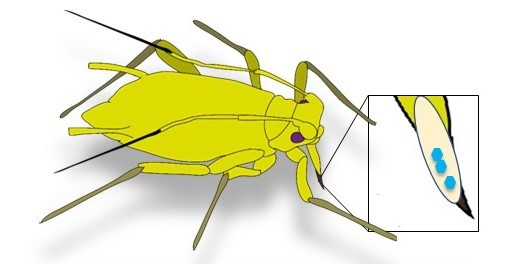
Non-persistent characteristics:
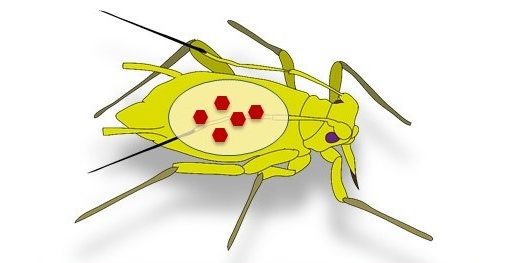
Persistent characteristics:
Cucumber mosaic virus (CMV; Cucumovirus CMV) is spread by at least 80 aphid species and can infect all major cucurbit crops, including cucumber, muskmelons (cantaloupes, honeydews, etc.), pumpkins, squashes, and watermelon. It has one of the largest host ranges of any plant virus, with infections reported for more than 1,200 plant species, including a wide range of vegetables (e.g., peppers, tomato, beans, and leafy greens) and many common weeds (Palukaitis & García-Arenal, 2003).
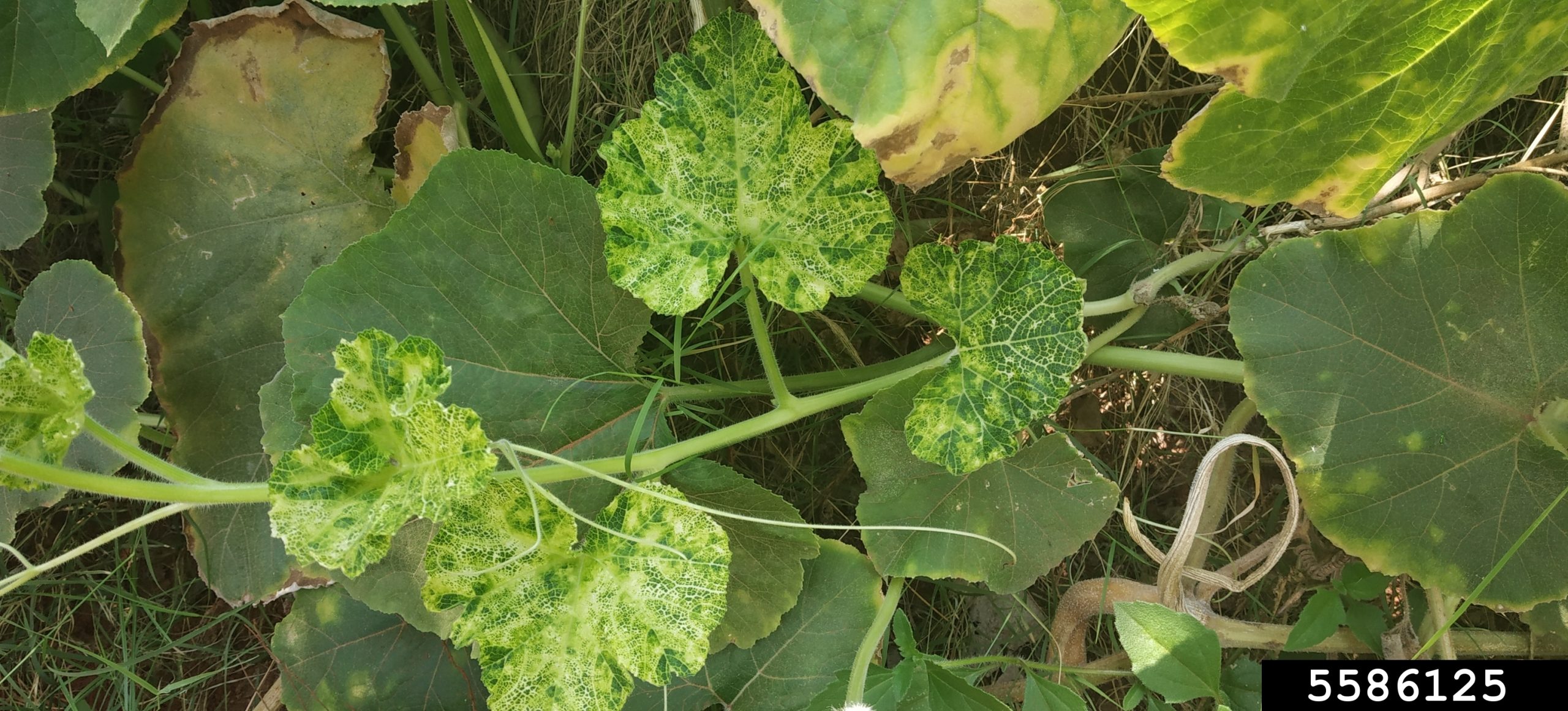
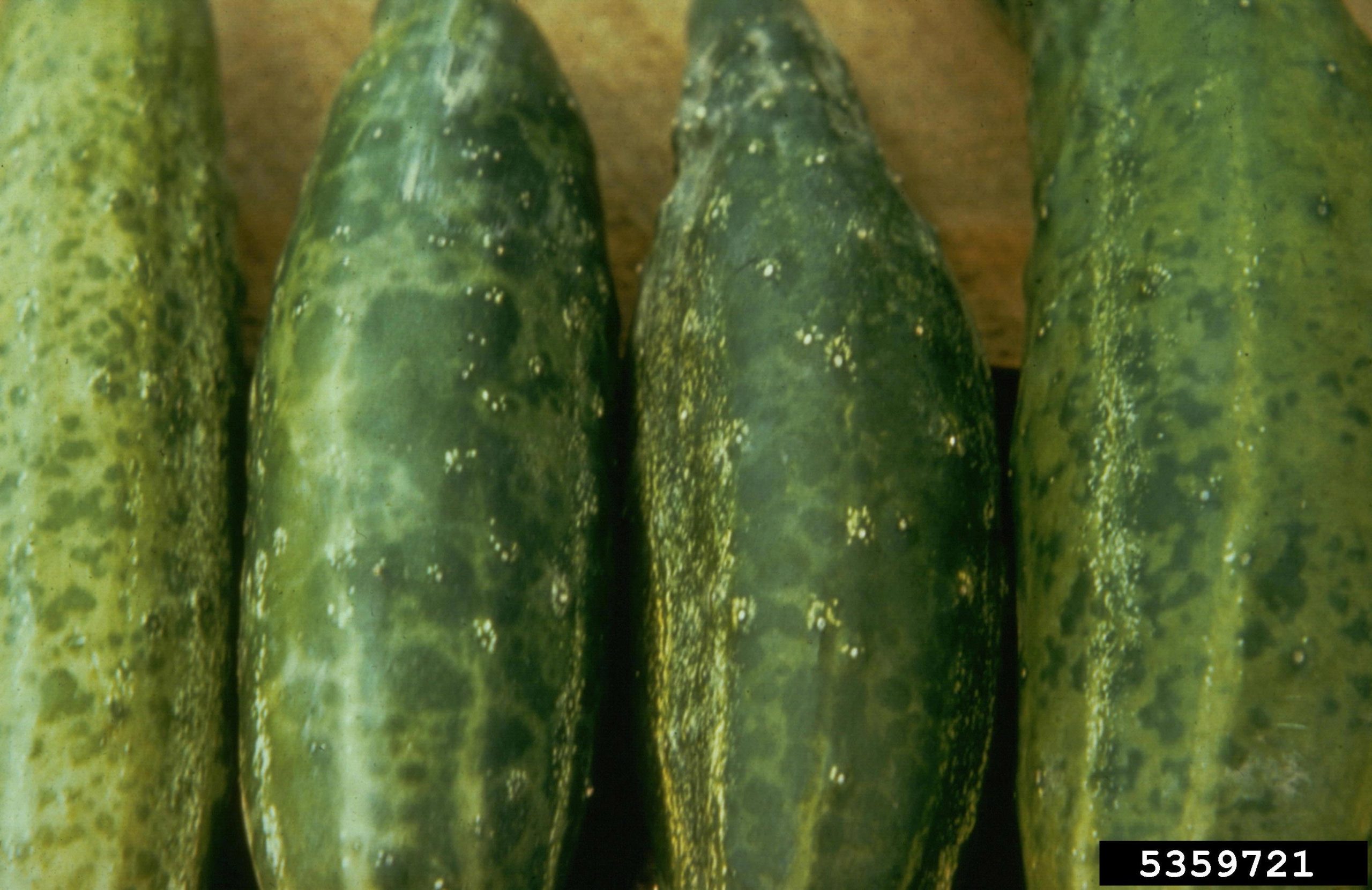
Symptoms: Following inoculation and establishment in the plant, symptoms appear within 7 to 14 days. Symptoms include a mosaic appearance (dark and light spots of coloration) and blistering and distortion of leaves (Figure 3A). Symptoms appear on newly expanding leaves, while older leaves may remain symptomless. CMV infection can reduce plant size, flower production, and fruit sugar content and cause discolorations that render fruit unmarketable (Figure 3B). CMV can also cause infections without symptoms in some hosts, especially in common weeds.
Papaya ringspot virus (PRSV; Potyvirus papayanuli) is known to be transmitted by at least 24 aphid species. It can infect all economically important cucurbit crops as well as wild cucurbits, such as bitter melon (Momordica charantia).
Symptoms: Symptoms appear within 7 to 14 days after infection and vary depending on the host. Foliar symptoms occur first on young, expanding leaves and can include severe distortion (including blade narrowing), blistering, mottle, and mosaic of leaves. Distortion resulting in wide, fan-shaped leaves is also common (Figure 4A). Fruits of infected plants are often deformed and may exhibit color breaking patterns that make them unmarketable (Figure 4B).
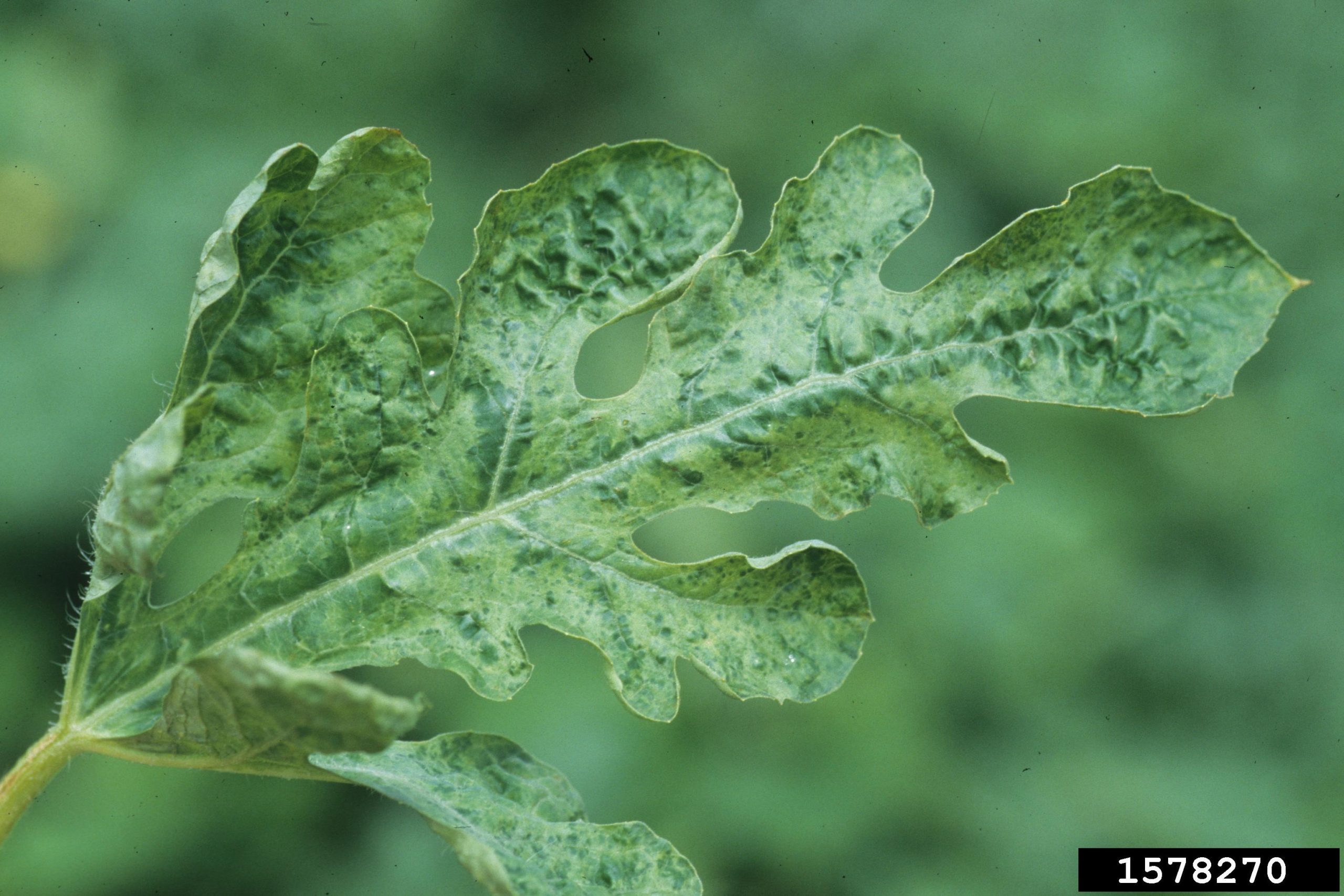
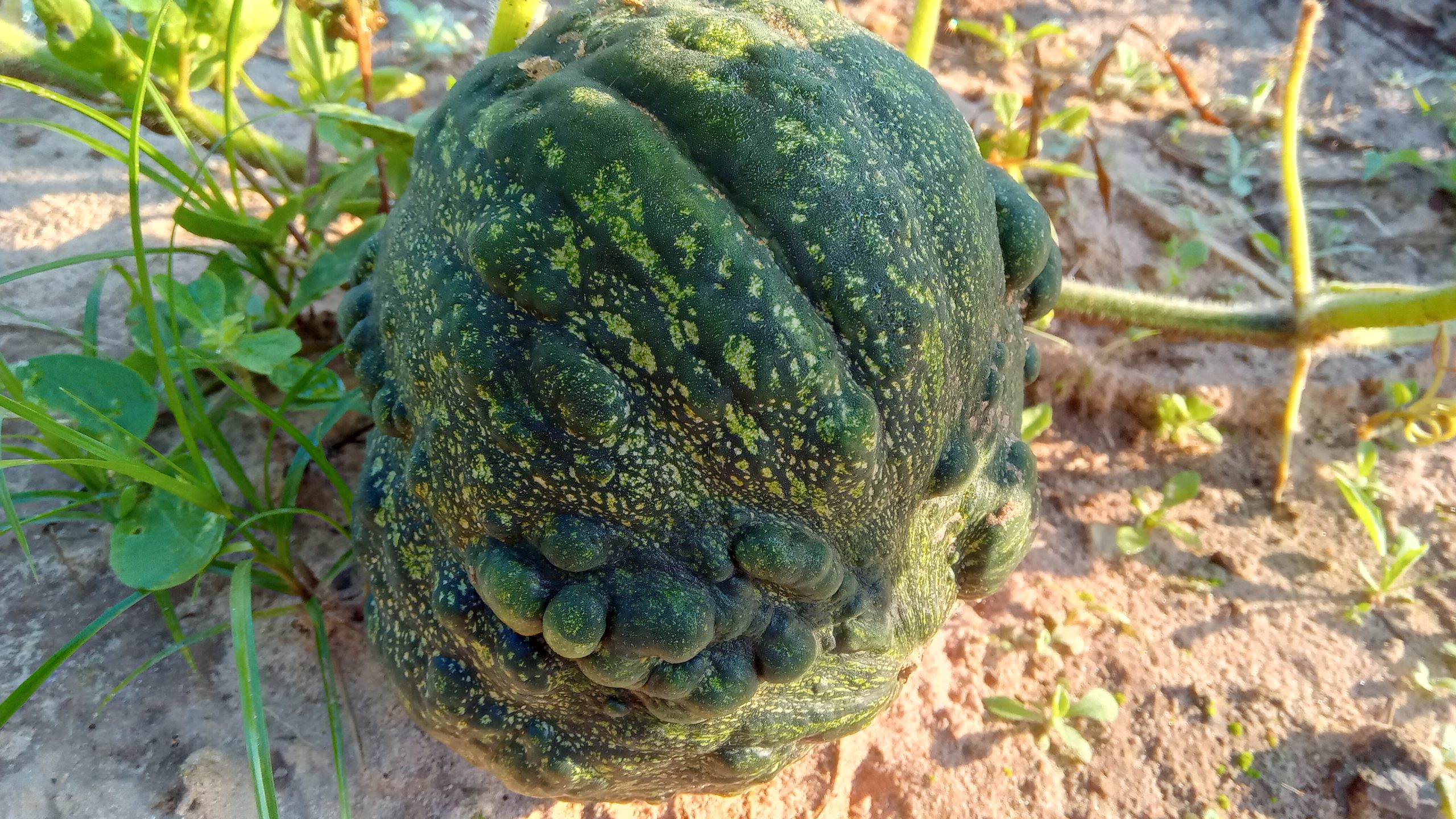
Watermelon mosaic virus (WMV; Potyvirus citrulli) is known to be transmitted by at least 35 aphid species. It can infect all economically important cucurbit crops but causes the most significant losses in gourds, pumpkins, and squashes. WMV can infect more plant species than most other potyviruses. It has experimentally been shown to infect 170 species across 27 plant families, including non-cucurbit crops, such as alfalfa, carrot, passionfruit, and tomato as well as wild hosts, such as black locust, clover, and weedy cucurbits (e.g., bitter melons in the genus Momordica, coyote melon, and buffalo gourd) (Ravikumara et al. 2025).
Symptoms: Symptoms of WMV infection in cucurbits appear within 7 to 14 days after inoculation and differ depending on the cucurbit species, variety, and environmental conditions. Common foliar symptoms include yellowing between leaf margins and veins that produces a mosaic, distortion, and reductions in size (Figure 4C+D). Symptoms appear first on young, newly expanding leaves, while older leaves remain symptomless. Fruits are often stunted and mottled with a bumpy or warty texture, and discolorations that make them unmarketable. Infections can also cause fruit abortion or abscission. Watermelon fruits produced on infected plants sometimes have ringspots and spiral patterns.
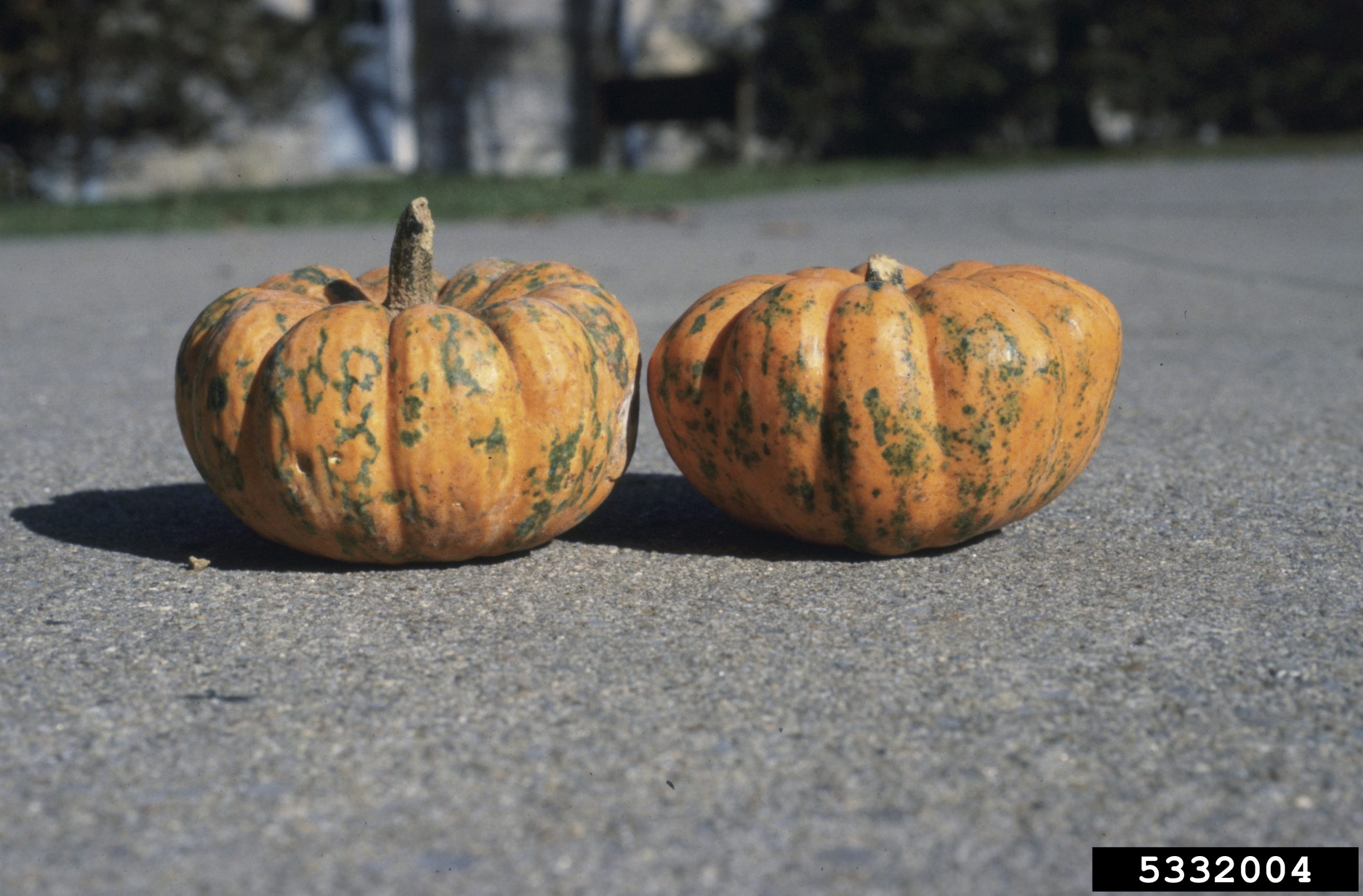
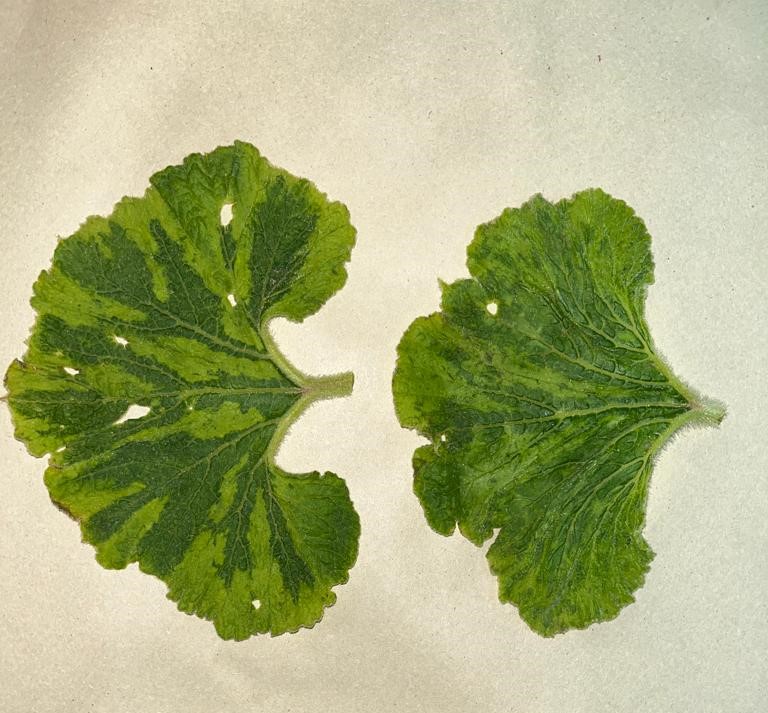
Zucchini tigré mosaic virus (ZTMV; Potyvirus pepotigris) is a distinct virus related to PRSV (Romay et al. 2014, Arch. Virol. 159). Aphid species that can transmit PRSV are suspected to also be capable of transmitting ZTMV. The host range is not well known but is presumed to include all major cucurbit crops. The virus was first found infecting squash in the U.S. in Florida in 2002 (Webb et al. 2016, Plant Dis. 100). ZTMV has also been detected in Hawaii (Wang et al. 2019, Plant Dis. 103).
Symptoms: Symptoms of ZTMV include a tiger stripe yellowing pattern on leaves that appears 7 to 14 days after infection (Figure 5A). These symptoms are most apparent on squash and pumpkin plants. Other symptoms include leaf distortion, fruit blistering, and color breaking on fruits (Figure 5B). These symptoms reduce marketability.
Zucchini yellow mosaic virus (ZYMV; Potyvirus cucurbitaflavitesselati) is known to be transmitted by at least 17 aphid species. Very low levels of seed transmission have also been reported (Simmons et al., 2013, Vir. Res. 176). ZYMV infects all major cucurbit crops, with the most severe economic losses occurring in cucumber, muskmelons, and zucchini squash. Wild cucurbits, such as buffalo gourd (Cucurbita foetidissima) and coyote gourd (C. palmata) are also suitable hosts. Few non-cucurbit hosts have been identified; these include henbit (Lamium amplexicaule), hairy buttercup (Ranunculus sardous), fenugreek (Trigonella foenum-graceum), and bluewings (Torenia fournieri) (Perring et al. 1992, Cal. Ag. 46).
Symptoms: Symptoms of ZYMV infection in cucurbits appear 7 to 14 days after inoculation. Typical symptoms include a mosaic with light yellow patches. Symptoms may also include leaf narrowing (Figure 6A), blistering, and distortion that can cause leaves to have a filiform (fingerlike) appearance (Figure 6B). Symptoms appear first on young, expanding leaves, while older leaves remain symptomless. ZYMV infection can reduce plant size, flower production, and sugar content of fruit and cause discolorations that render fruit unmarketable.
| Virus | Type of transmission & known aphid vectors | Host range | Distribution |
|---|---|---|---|
| Cucumber mosaic virus (CMV) | Non-persistent Melon aphid, Green peach aphid + 80 others | Squash, pumpkins, melons, watermelons, cucumbers + 1,200 other hosts | Continental U.S. and Hawaii |
| Cucurbit aphid-borne yellows virus (CABYV) | Persistent Melon aphid, Green peach aphid | Squash, pumpkins, melons, watermelons, cucumbers + wild cucurbits, goosefoots, sowthistle, groundsel, cheeseweed | Southern continental U.S. and central California |
| Papaya ringspot virus (PRSV) | Non-persistent Melon aphid, Green peach aphid + 22 others | Squash, pumpkins, melons, watermelons, cucumbers + papaya, wild cucurbits, goosefoots (weeds) | Southern continental U.S., midwestern U.S. east of the Mississippi River, northeastern U.S. |
| Watermelon mosaic virus (WMV) | Non-persistent Melon aphid, Green peach aphid + 33 others | Squash, pumpkins, melons, watermelons, cucumbers + wild cucurbits, carrots, mallows, peas, tomatoes | Continental U.S. |
| Zucchini tigré mosaic virus (ZTMV) | Non-persistent Vectors unknown | Squash, melons | Florida and Hawaii |
| Zucchini yellow mosaic virus (ZYMV) Note: Low levels of seed transmission are also possible for this virus. | Non-persistent Melon aphid, Green peach aphid + 15 others | Squash, pumpkins, melons, watermelons, cucumbers + wild cucurbits, beans, tomatoes, peas | Continental U.S. and Hawaii |
Cucurbit aphid-borne yellows virus (CABYV; Polerovirus CABYV) is spread mainly by the melon aphid and, to a lesser extent, the green peach aphid. CABYV is known to infect all economically important cucurbit crops as well as many wild cucurbits. Other hosts include beets, fava bean, lettuce, peanut, and common weeds, such as cheeseweed (Malva parviflora), groundsel (Senecio vulgaris), henbit, London rocket (Sysimbrium irio), miner’s lettuce (Montia perfoliata), and shepherd’s purse (Capsella bursa-pastoris) (Rabadán et al. 2025, Ann. Appl. Biol. 187). Infections in weeds may be asymptomatic, and weeds can serve as a virus reservoir from which aphids can acquire the virus. CABYV is widespread throughout the Southwest, where it frequently occurs in mixed infections with mosaic viruses.
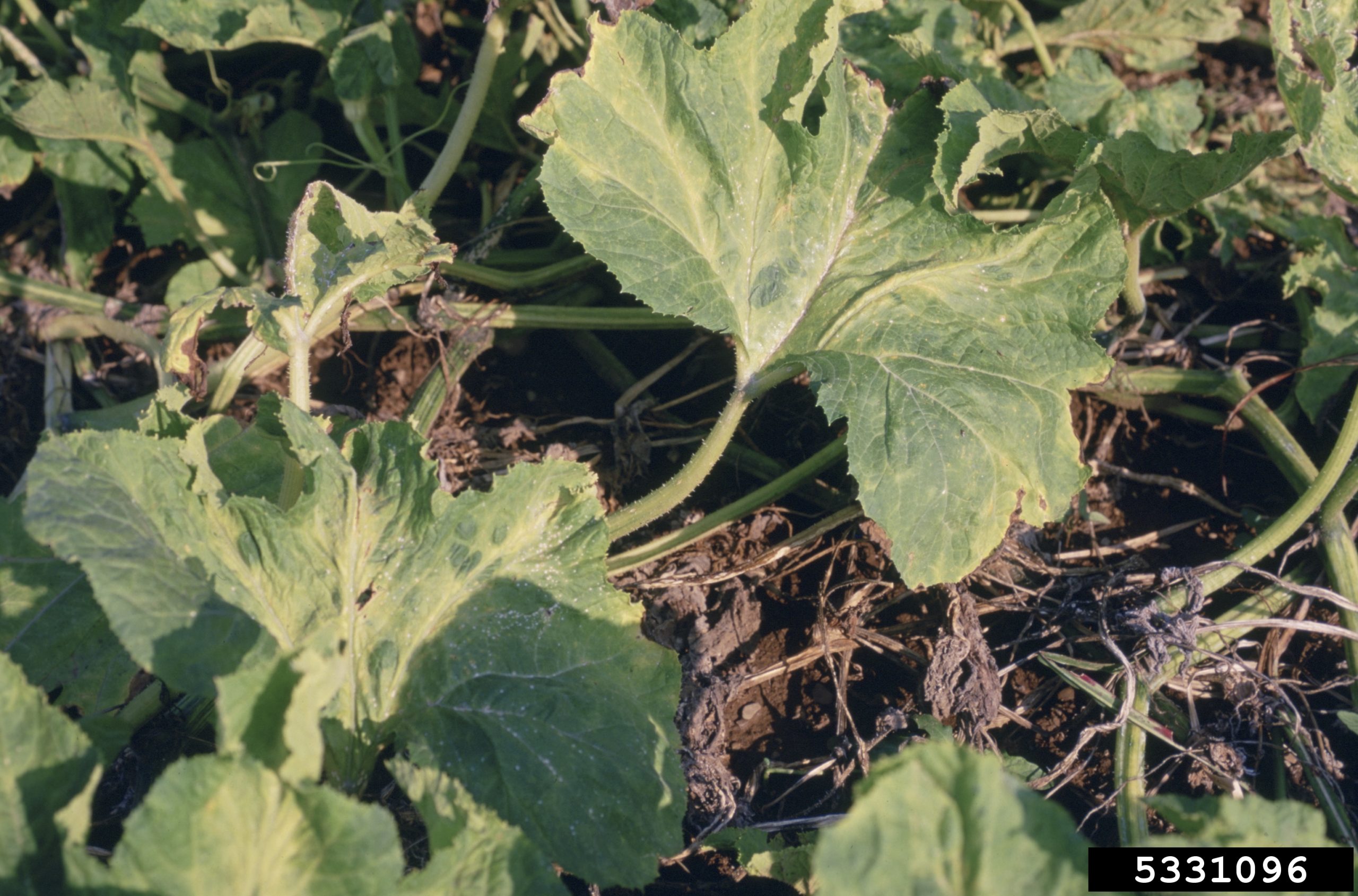
Symptoms: In cucurbits, CABYV infections cause foliar yellowing and brittleness. Symptoms appear first on older leaves. Symptoms begin as a chlorotic mottle on leaves and progress to an extensive interveinal yellowing (Figure 7). Symptom severity and progression to younger leaves depends on environmental conditions, plant species/variety, and timing of infection. CABYV infections usually do not affect fruit quality but can affect flower production, which reduces yield.
Symptoms alone cannot be used for diagnosis as they are not reliable indicators of which virus(es) may be present in a plant. Symptoms caused by a virus may vary depending on environmental conditions, stage of plant development when infection occurs, and the cucurbit species or variety being infected. The potyviruses (PRSV, WMV, ZTMV, and ZYMV) and CMV produce very similar symptoms, and multiple viruses can infect the same plant, which may alter symptoms. Aphid-transmitted viruses can also co-infect with viruses transmitted by whiteflies (Mondal et al. 2023, Plant Dis. 107). In addition to altering symptoms, mixed infections may also cause more severe impacts on fruit quality and quantity than single infections (Wang et al. 2002, Phytopath. 92).
Accurate diagnosis of plant virus infections requires the use of serological or molecular assays, such as those typically performed in commercial, government, or academic research or diagnostic laboratories. If cucurbit virus infection is suspected, contact your local county Extension agent or vegetable crops advisor, or your plant diagnostic laboratory to determine testing capabilities before collecting and sending samples for diagnosis. It is helpful for Extension agents, advisors, and diagnosticians to have other relevant information about the samples, including pictures and/or descriptions of symptoms, crop production details, host (including variety), pest management practices, and the presence of aphids or other known virus vectors in the crop.
Visit the EVCWG Diagnostics Page for more information on diagnostic laboratories and protocols.
Managing virus diseases in cucurbits involves integrated pest management approaches focused on prevention, vector control, sanitation, and use of resistant cultivars. There are no chemical treatments that can cure virus-infected plants. Therefore, management relies on preventing initial infections and subsequent spread to new plants.
Cucurbit varieties that carry genetic resistance or tolerance to certain aphid-transmitted viruses are commercially available for some cucurbit crops. Summer squash (Cucurbita pepo) varieties that carry the precocious yellow gene do not exhibit fruit mottling symptoms induced by CMV and WMV (Snyder et al. 1993, HortTech. 3). Researchers have also developed genetically modified lines of summer squash and cantaloupe expressing coat protein genes of CMV, WMV and ZYMV; the ZW-20 lines are resistant to WMV and ZYMV, and the CZW-3 lines are resistant to WMV, ZYMV, and CMV (Tricoll et al. 1995, Biotech. 13; Fuchs et al. 1997, Mol. Breed. 3; Fuchs et al. 1998, Plant Dis. 82). Coat protein gene expression fully prevents infection by these viruses resulting in up to 50-fold increases in yield (Fuchs et al. 1998). The commercial availability of these varieties in the U.S. is uncertain due to consumer disinterest in genetically modified crops, but they are approved for food use in Canada.
Some universities maintain lists of cucurbit crop varieties with resistance against various pathogens. It is important to note that what is listed as resistance may instead be tolerance (plants are infected, but virus impacts on yield and quality are reduced). In these cases, fields with tolerant varieties can still serve as a source of the virus for aphid-transmission to adjacent crops. Seed suppliers may be able to provide more information about the type of genetic resistance or tolerance in a variety and how it performs in a specific area.
Biologically-based insecticides are pest management products made from natural materials, including substances from plants, animals, bacteria, and/or minerals. Biological control is a method of pest management that uses natural enemies, such as predators, parasites, or pathogens, to reduce pest populations. Biological controls for aphids include predators (e.g., lady beetles, lacewings) and parasitoids, many of which are commercially available. The efficacy of biologically-based insecticides and biological controls is more dependent on aligning applications or releases with pest life cycles and favorable environmental conditions than conventional insecticides. Release of purchased biological control organisms is most effective in enclosed production systems. Consult regional production guidelines and resources to determine appropriate biologically-based insecticides, predators, and parasitoids available for aphid management. Always read and follow product labels and check the state registration status of products prior to use. Products permitted for use in organic agriculture are listed on the Organic Materials Review Institute’s website, www.omri.org; be sure to consult your organic certifying agency before buying or using any pest management products.
Flying aphids are attracted to the contrast of green plants against a dark soil background and to the odors emitted by the host plants they use for feeding and reproduction. Behavioral manipulations disrupt the cues aphids use to find their host plants, thereby reducing aphid numbers in crops and preventing virus inoculation. The most effective behavioral manipulation in cucurbit protection is the use of white and reflective plastic mulches (Ben-Yakir et al. 2013) (Figure 8). Straw mulch is also effective as an alternative (Summers et al. 2004, Environ. Entomol. 33). In a trial in California, researchers found significant reductions in trapped aphids within the crop area when using reflective plastic mulch or straw mulch for culture of zucchini squash, and a 3- to 12-fold increase in yield (Summers et al. 2004). Other examples of behavioral manipulations include companion planting, in which plants that deter aphids by smell or appearance are placed among the crop, and intercropping, where two or more crops are planted in the same field, providing a less uniform target. These approaches can prevent disease but reduce cucurbit yields because planting area is sacrificed for companion plants and intercrops (Damicone et al. 2007, Plant Dis. 73).
Barrier plants can prevent aphid entry into a crop and aid in purging viruses from aphid stylets. For example, intercrop rows or edge rows of maize significantly reduced movement of aphids carrying CMV into vegetable crops (Hooks and Fereres 2006, Virus Res. 120). The taller maize plants are visually attractive, but are not a host for CMV, so aphids effectively “clean” their stylets of non-persistent viruses by probing on the maize before moving into the cucurbit crop. This technique may be effective for smaller acreage operations but has not been tested in large-scale cucurbit production. Use of barrier crops and intercrops depends on water availability and compatibility with other agronomic practices, such as weed management.
Insecticides can reduce virus spread by reducing populations of resident aphids, such as the melon and green peach aphid, that feed and reproduce on cucurbits. Insecticides are generally not effective for management of non-persistently-transmitted viruses because these viruses are transmitted too quickly for insecticides to act and are often transmitted by transient aphids that do not remain to feed on the crop. For persistently-transmitted viruses, such as CABYV, that are spread during long-term feeding, insecticides can disrupt the transmission process by preventing access to plant vascular tissue. Available insecticide options vary depending on state regulations, but the best options are those that cause rapid cessation of feeding, as this prevents virus transmission. Insecticides with residual or systemic activity will provide prolonged management and prevent new immigrant aphids from establishing. Consult regional production guidelines and resources to determine appropriate materials available for aphid management. Always read and follow product labels and check the state registration status of products prior to use.
The impacts of virus infections are greatest when plants are infected at early growth stages. Older plants are often less likely to become infected (age-related resistance) or can tolerate infection without impacts on yield and fruit quality. For example, cantaloupe yields were only reduced if plants were infected with ZYMV before fruit set (Blua et al. 1989, Plant Dis. 73). Practices that delay virus infection are useful in areas where virus pressure is both high and predictable, since young plants are likely to become infected if left without protection. Row covers composed of translucent fine mesh polyspun fabric can be placed on plants early in the growth period to protect them from aphid exposure, but covers must be removed prior to flower set to allow for pollination. While useful for small operations producing high value crops, this practice can be costly for large acreage operations.
Crop placement, weed management, and removal of volunteer cucurbit plants can help reduce exposure to aphids and viruses coming from other hosts. When possible, avoid planting new cucurbit crops adjacent to crops known to have or attract aphids (including other established cucurbits) (Table 1), serve as reservoir hosts for viruses (Table 2), or have confirmed virus infections. If planting near adjacent crops that harbor aphids or viruses cannot be avoided, the adjacent crop should be managed to ensure aphid populations remain small. Volunteer cucurbit plants should be removed as these often serve as reservoirs for viruses and vectors between plantings. Most aphid-transmitted viruses of cucurbits, especially CMV, can also infect common weeds that occur on field edges. Removing weeds can reduce the likelihood that aphids will probe and acquire viruses from surrounding vegetation and then transmit these viruses to the cucurbit crop.
In some growing regions, area-wide monitoring data that provides historical or current data on aphid movement may be available via public websites or apps. These monitoring programs are typically run by cooperative Extension personnel. Consult your local Extension agent or vegetable crops Advisor to determine if a local program is available. Data from area-wide monitoring programs are not indicative of field-level infestations but provide valuable information for decision making on planting dates and scouting efforts.
Keinath, A. P.,Wintermantel, W. M., and Zitter, T. A. (eds.), Compendium of Cucurbit Diseases and Pests, 2nd edition (pp. 128–130). American Phytopathological Society Press.
Visit the References page for a full reference list of cited articles.
Alate: an aphid with wings, winged aphids develop when populations become too crowded or food is scarce.
Behavioral manipulation: the use of techniques that exploit or alter insect behavior to manage populations or mitigate their impact on crops.
Genetically modified: an organism whose DNA has been altered using genetic engineering to introduce new traits, often by adding or changing specific genes in a way that does not occur naturally.
Honeydew: the sugary, sticky waste excreted by aphids, which coats plant surfaces and serves as a food source for sooty mold (fungi visible as black sooty pathogen growth).
Inoculate: to introduce an infectious agent, such as a virus, into an organism.
Latent period: the time between vector acquisition of a persistently-transmitted virus and the ability of the vector to transmit the virus.
Mixed infection: the presence of two or more viruses in the same host plant.
Mosaic: a symptom of virus infection; blotchy light and dark green or yellow patterns on leaves, often accompanied by distortion, curling, and stunting.
Non-persistently-transmitted virus: a type of virus carried on aphid stylets (mouthparts) that is acquired during feeding or brief probes of plant leaves and retained within the insect vector for a short period of time (several minutes up to a few hours).
Persistently-transmitted virus: a type of virus transmitted by insect vectors where the virus remains infectious in the vector for an extended period, sometimes even for the vector’s entire lifespan.
Plant phloem: a tube-like tissue in plants that conducts sugars and other products through the plant.
Plant resistance: a plant’s inherent ability to defend itself against pests and diseases; resistance reduces the impact of targeted threats on growth and yield.
Reservoir: a plant that can be infected with and serve as a long-term source of a virus from which vectors may acquire the virus and become viruliferous; reservoirs may not develop disease symptoms.
Resident aphids: aphids that feed and reproduce on a crop.
Stylet: the hollow, needle-like mouthpart on aphids used to probe plant tissue and feed on sap in the phloem.
Transient aphids: aphids that briefly visit and probe crop plants but do not remain on the plants to feed and reproduce.
Vector: an insect that transmits infectious pathogens, such as viruses or bacteria, from one plant to another.
Viruliferous: an insect vector that has acquired a virus and is capable of transmitting it to a plant.
This work is a publication of the Emerging Viruses in Cucurbits Working Group. It is supported by funding from the USDA NIFA (Agreement 2022-70006-38002) through the Southern IPM Center’s grant program project S24-048. Any opinions, findings, conclusions, or recommendations expressed in this publication are those of the author(s) and should not be construed to represent any official USDA or U.S. government determination or policy.


This publication may be distributed without alteration for nonprofit educational purposes provided that appropriate credit is given to the authors and the Emerging Viruses in Cucurbits Working Group. Permission for any other uses should be requested from the Emerging Viruses in Cucurbits Working Group.
Author: Kerry Mauck, University of California, Riverside
Senior editors: Rebecca A. Melanson, Mississippi State University, and William M. Wintermantel, USDA-ARS
Reviewers: Tom Turini, UC Davis, and Cesar Escalante, Purdue University
We value your time and feedback! If now is not a convenient time to complete this evaluation, you can find the evaluation link on the website homepage.