Taxonomy: Potyviridae, Ipomovirus, Ipomovirus cucurbitavenaflavi
The most up-to-date and complete virus taxonomy is available on the International Committee on Taxonomy of Viruses webpage.
Squash vein yellowing virus (SqVYV) is an emerging and economically important virus of cucurbit crops in the United States (U.S.), especially in the Southeast where it causes the highly damaging watermelon vine decline (WVD) disease. This virus was first identified in 2003 in symptomatic squash in Florida, where it induced vein yellowing, mosaic, and leaf deformation in squash (Cucurbita pepo). SqVYV is transmitted in a semi-persistent manner by the sweetpotato whitefly, Bemisia tabaci (Webb et al., 2012). SqVYV is not seed-borne nor is it transmitted by casual contact, but it is readily mechanically transmitted (Adkins et al., 2007, Phytopath. 97). Initial outbreaks of WVD in Florida in 2003 and 2004 reduced yields by 50 to 100% with economic loss estimates of $60 to $70 million (Huber, 2006). The virus has since been reported in several states and territories within the United States and several countries in Central America and the Middle East.
The host range of SqVYV is limited to crop and weed species in the family Cucurbitaceae, including melon, pumpkin, squash, and watermelon (Adkins et al., 2007; Webster et al., 2013, Plant Dis. 97). Symptoms and the economic importance of SqVYV infection vary by cucurbit type and cultivar (Webster et al., 2013; Macedo et al., 2024, J. Gen. Virol. 105). In general, squash is highly susceptible, pumpkin is somewhat less susceptible than squash (moderately susceptible), and watermelon can develop devastating WVD. In contrast, melons (cantaloupe and honeydew) and cucumbers are substantially less susceptible, often only developing vein yellowing that may be transient, suggesting recovery from infection (Macedo et al., 2024). Thus, in terms of crop damage and economic loss, watermelon is the most heavily impacted, due to the total collapse of vines and fruit rot associated with SqVYV infection during WVD (Adkins et al., 2013, Plant Dis. 97).
Cucurbit plants infected with SqVYV naturally via sweetpotato whiteflies or mechanically in the laboratory initially develop vein yellowing (clearing) in newly emerging leaves 7 to 14 days after inoculation (Figure 1). However, following the appearance of vein yellowing, symptom expression of different cucurbit species varies substantially. Squash and pumpkin (C. pepo) cultivars are typically highly susceptible and develop more extensive vein and leaf yellowing, along with crumpling and distortion of leaves, which can lead to economic loss (Adkins et al., 2007). In butternut squash (C. moschata), SqVYV induces vein yellowing, chlorotic spots, mosaics, curling, and yellowing of leaves (Webster et al., 2013; Acevedo et al., 2013, Plant Dis. 97; Hernandez et al., 2021, Plant Dis. 105).
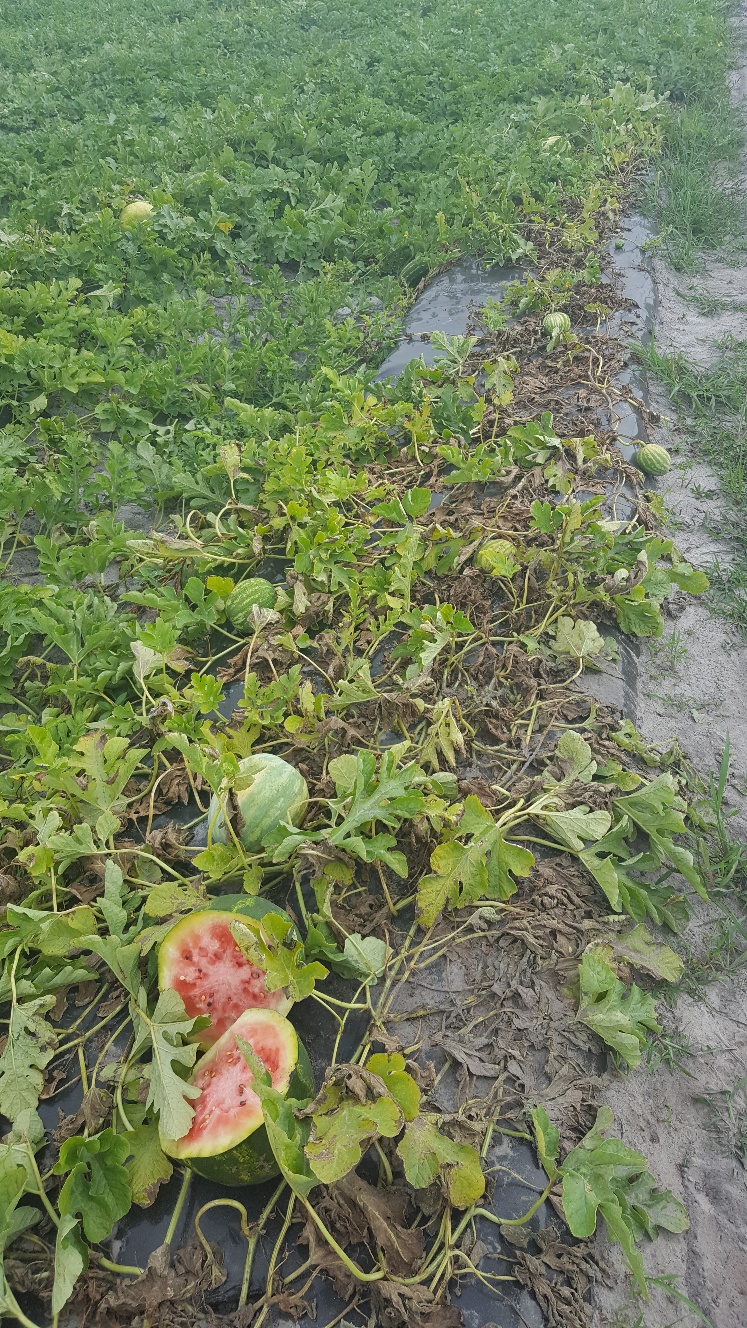
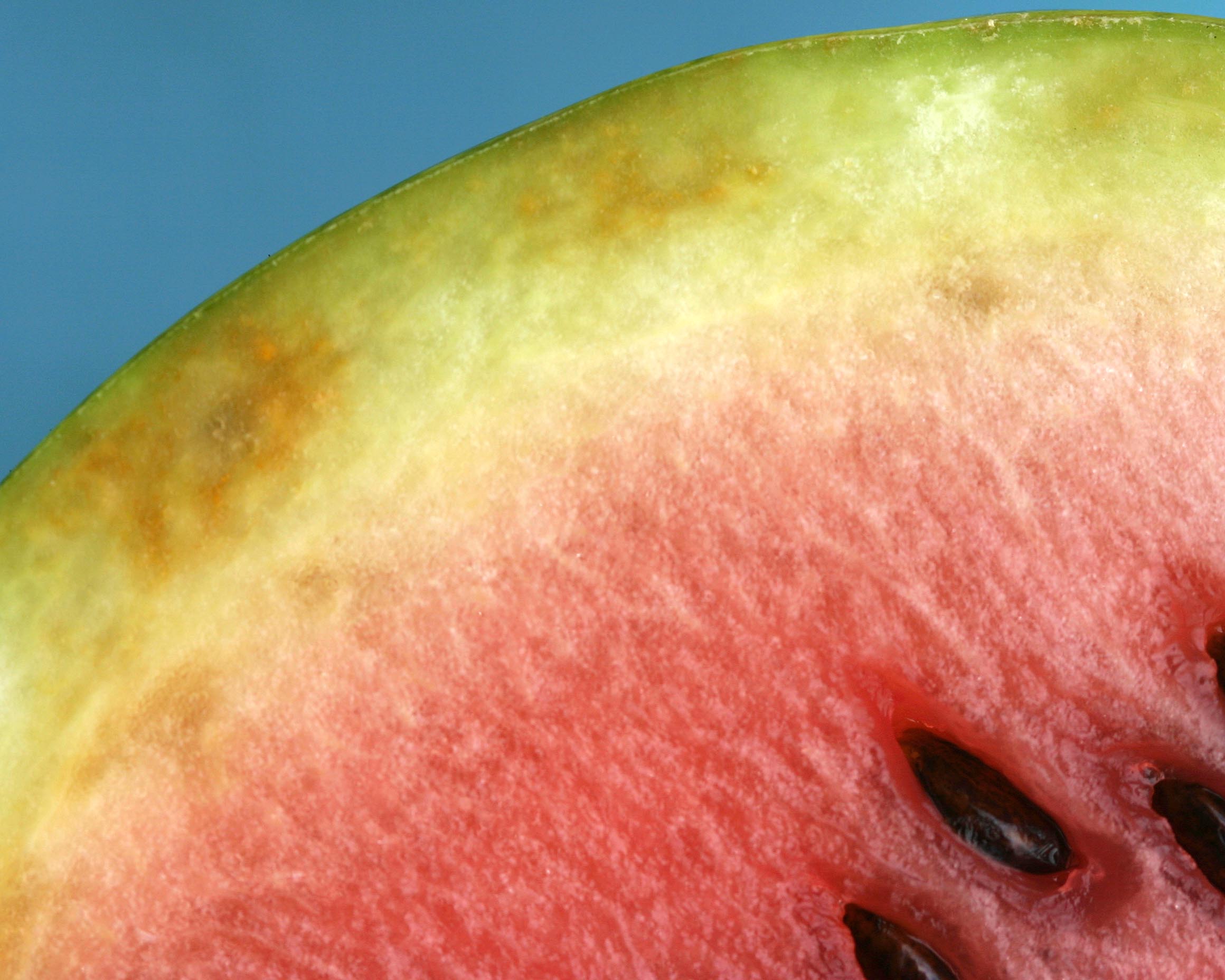
Watermelon plants infected with SqVYV initially develop vein yellowing, chlorosis, and epinasty of the youngest leaves (Adkins et al., 2007). As plants mature and near harvest, necrosis in petioles and stems may develop resulting in the collapse of entire plants and development of WVD disease (Figures 2). Fruit from vines with WVD are often not marketable due to rind necrosis and pulp degradation (Figures 3 and 4). WVD can result in substantial economic losses, including up to 100% yield loss in heavily affected fields. In addition to the United States, WVD has been reported in Guatemala (Jeyaprakash et al., 2015, PHP 16) and Israel (Reingold et al., 2016, Plant Dis. 100). Although auniques strain of SqVYV was detected in California in 2014 (SqVYV-CA), WVD has not been observed (Batuman et al., 2015, Plant Dis. 99; Macedo et al., 2024).
Cucumber developed vein yellowing following inoculation with the SqVYV isolate from Israel (Reingold et al., 2016). Melons (cantaloupe and honeydew) are less susceptible and develop relatively mild vein yellowing and mosaic, which may become less severe in some cultivars (Devendran et al., 2023, Viruses 15), consistent with recovery from infection. Notably, in Florida, SqVYV induced symptomless infections in cucurbit weeds, including balsam apple (Momordica charantia), smellmelon (Cucumis melo var. dudaim), and wild citron (Citrullus lanatus var. citroides) (Adkins et al., 2008, Plant Dis. 92; Webster et al. 2013).
It is important to note that identification of SqVYV infection based on visual symptoms alone is difficult because of the wide range of symptoms induced in different cucurbits and the common occurrence of mixed infections with other viruses. Symptoms of SqVYV infection may be confused with those caused by infection with cucurbit aphid-borne yellows virus (CABYV), cucurbit yellow stunting disorder virus (CYSDV), and cucurbit chlorotic yellows virus (CCYV). WVD symptoms may also be confused with vascular wilt diseases caused by fungal pathogens (Verticillium dahliae or Fusarium oxysporum) and root-knot nematodes (Meloidogyne spp.) as well as symptoms attributed to various nutrient deficiencies or herbicide damage.
In nature, SqVYV is transmitted by the sweetpotato whitefly (Bemisia tabaci MEAM1, formerly biotype B) in a semi-persistent manner (the virus does not circulate through the whitefly and is retained in the mouthparts, and possibly foregut, for a period of days) and not passed to offspring. Studies with a SqVYV isolate from Florida demonstrated that a minimum of 30 minutes was needed for whiteflies to acquire or transmit SqVYV and that transmission efficiency increased as numbers of whiteflies or the period of feeding increased. Importantly, whiteflies were not able to transmit SqVYV after 24 hours of being removed from an infected source (Webb et al., 2012, Plant Dis. 96).
The primary sources of SqVYV inoculum are infected transplants and viruliferous (virus-carrying) whiteflies flying or blown in from infected plants (existing cucurbit fields or other reservoir hosts). In Florida, cucurbit weeds were identified as reservoir hosts (Adkins et al., 2008; Shrestha et al., 2016, Environ. Entomol. 45); other reservoir hosts may exist and may vary across regions. Whitefly transmission experiments established that whiteflies acquired SqVYV from infected weeds and transmitted the virus to watermelons, which developed WVD symptoms, and whiteflies that acquired SqVYV from infected watermelon plants transmitted the virus to the weeds, which were symptomless or developed mild vein yellowing (e.g., in creeping cucumber (Melothria pendula)) (Shrestha et al., 2016). When cucurbit fields are harvested, whiteflies migrate to more recently planted fields. The subsequent spread of the virus within fields reflects the availability of primary inoculum sources as well as whitefly populations in fields.
SqVYV often occurs in mixed infections with other whitefly-transmitted, such as CYSDV, CCYV, and cucurbit leaf crumple virus (CuLCrV), and/or aphid-transmitted viruses, such as papaya ringspot virus (PRSV), watermelon mosaic virus (WMV), and zucchini yellow mosaic virus (ZYMV), that are common in the United States (Batuman et al., 2013; Macedo et al., 2024; Mondal et al., 2023, Plant Dis. 107). Plants infected with more than one virus often have altered and more severe symptoms, which can complicate diagnosis and can lead to increasedyield losses.
Since the first detection of SqVYV in Florida in 2003, the virus has been detected throughout the United States, Central America, the Caribbean Basin, and the Middle East.
Note: Years in parentheses indicate when SqVYV was first identified in that location.
For the most up-to-date information on geographical incidence, please visit this website (www.eCucurbitviruses.org) or or CAB International’s Invasive Species Compendium.
Symptoms alone cannot be reliably used to diagnose SqVYV infection. Diagnosis requires molecular or serological assays that are commonly used in many research and diagnostic laboratories. These include ELISA (enzyme-linked immunosorbent assay; Webster et al., 2017, Plant Dis. 101), a tissue blot hybridization test (Webster et al., 2013), conventional RT-PCR (reverse transcription-polymerase chain reaction; Adkins et al., 2008); a RT-qPCR assay (quantitative RT-PCR; Webster et al., 2017), and in-field detection with RPA (recombinase polymerase amplification). In addition, multiplex RT-PCR and RT-qPCR assays have been developed that detect SqVYV and other cucurbit-infecting viruses (Jailani et al., 2021, Physiol. Mol. Plant Pathol. 116; Mondal et al., 2023). For the detection of SqVYV in symptomatic watermelon plants, tissue samples from the crown or peduncles provided more reliable detection compared with leaf samples (Turechek et al., 2010, Phytopathol. 100; Adkins et al., 2013). An RT-PCR test also has been developed for the specific detection of SqVYV-CA, which is genetically distinct from SqVYV in Florida (Macedo et al., 2024).
Contact your local plant diagnostic laboratory to determine testing capabilities, as these vary among laboratories.
Visit the diagnostic laboratories page for a list of published protocols and/or references describing appropriate (virus) detection methods.
Cucurbit varieties with resistance to SqVYV are not commercially available. However, screening of watermelon germplasm for resistance to WVD identified several cucurbit species, including Citrullus colocynthis, Praecitrullus fistulosus, and C. lanatus var. lanatus (watermelon), with moderate resistance (Kousik et al., 2009, HortScience 44). Resistance derived from C. lanatus var. lanatus PI 392291 was used to develop watermelon germplasm line 392291-VDR, which is still susceptible to SqVYV but does not develop vine wilting or fruit symptoms (Kousik et al., 2012, HortScience 47).
In the absence of resistant varieties, the most effective way to manage SqVYV is to develop a comprehensive integrated pest management (IPM) program that is based on knowledge of the biology of the virus and its whitefly vector and appropriate for the type of production in a given area.
Adjusting planting dates to avoid periods of high whitefly activity can help limit virus pressure. Providing adequate spatial separation between early‑ and late‑planted fields can further limit the movement of whiteflies and reduce the overall virus pressure across the production landscape.
Infected transplants can be a primary source of inoculum and can result in the introduction of SqVYV to new areas. Transplants should be purchased or produced locally and, ideally, not in areas with high whitefly or virus pressure. If it is not possible to avoid large whitefly populations, producing transplants in whitefly-proof screened facilities can greatly reduce the risk of infected transplants. Monitor and, when necessary, treat transplants early for whiteflies. Transplants can be drenched with systemic insecticide just prior to transplanting, which is advisable when plants are sourced from or being transplanted in areas with known whitefly incidence or if the transplants are being transported over long distances. Long-distance movement of infected plant material is the primary means of introducing viruses to new regions.
In raised-bed, plastic-mulch systems, the use of a silver metalized mulch for direct-seeded or transplanted crops can help repel adult whiteflies early in the season (Kousik et al., 2015, PHP 16).
Newly emerging seedlings and transplants can be protected in the field from feeding of adult whiteflies and virus inoculation by placing row coverings of whitefly-proof mesh materials (e.g., Agribon and Agril) over plants. Row covers help protect young highly susceptible plants from virus infection (LaTora et al., 2022, Horticulturae 8). Row covers must be removed at bloom to allow pollination to occur.
The removal or roguing of virus-infected plants early in the growing season (e.g., first 30 days after transplant) can greatly reduce sources of inoculum for secondary spread and can delay disease development. This method is more appropriate for small- and medium-sized farms.
Moderate to large whitefly populations are generally necessary can lead to increased disease incidence. Thus, effective whitefly management can minimize disease losses from SqVYV. Management begins with monitoring for adult whiteflies by using the leaf turn or yellow sticky card methods. Carefully turn leaves early in the morning to observe numbers of whiteflies on the lower surface of leaves. Effective insecticides should be applied, based on local whitefly thresholds, and repeated over the course of the growing season. In general, it is important to manage whitefly populations in cucurbit crops because excessive feeding can kill young plants, cause silvering of squash and pumpkin leaves, and potentially result in virus transmission. Ideally, whitefly suppression should be performed on an area- or region-wide basis to be most effective. Consult local or regional guidelines to determine the appropriate materials for suppressing whiteflies and treatment thresholds.
Established fields should be monitored for whiteflies prior to harvest, and contact insecticide application should be considered if populations are large and likely to migrate to nearby fields. Old cucurbit plants left in fields after harvest serve as important sources of viruses, including SqVYV, and insect vectors, such as whiteflies, and should be promptly terminated and destroyed. The application of a heavy crop oil with a contact-desiccating herbicide and an insecticide will reduce the movement of potentially viruliferous whiteflies to new fields.
In addition to suppressing whitefly populations with insecticides, it is essential to identify and remove nearby reservoir hosts of SqVYV and its whitefly vector. This practice is most effective when performed on a more extensive basis (area- or region-wide). This will reduce a potentially important source of SqVYV inoculum, especially for newly planted crops and during a cucurbit-free period.
Since SqVYV only affects cucurbitaceous plants and is transmitted by sweetpotato whiteflies in a semi-persistent manner, establishing a regional 2- to 3-month cucurbit-free period (about 2 to 3 whitefly generations) could be an effective management method to reduce the primary inoculum source. However, in tropical agroecosystems, such as southwestern Florida, where SqVYV is well-established, implementing a crop-free period is more challenging and may be less effective if there are large numbersof SqVYV-infected reservoir hosts.
Adkins, S., Webb, S. E., Achor, D., Roberts, P. D., and Baker, C. A. 2007. Identification and characterization of a novel whitefly-transmitted member of the family Potyviridae isolated from cucurbits in Florida. Phytopathology 97(2):145-154.
Macedo, M. A., Melgarejo, T. A., Vasquez- Mayorga, M. Cespedes, M., Rojas, M. R., Turini, T. A., Batuman, O., Wintermantel, W. M., and Gilbertson, R. L. 2024. Squash vein yellowing virus from California emerged in the Middle East via intragenic and intergeneric recombination events in the hypervariable potyvirus P1 and ipomovirus P1a genes. J. Gen. Virol. 105(10):002033.
Webb, S. E., Adkins, S., and Reitz, S. R. 2012. Semipersistent whitefly transmission of Squash vein yellowing virus, causal agent of viral watermelon vine decline. Plant Dis. 96(6):839-844.
Visit the References page for a complete reference list of cited articles.
This work is a publication of the Emerging Viruses in Cucurbits Working Group.
Funded by the Southern IPM Cener (Grant S24-048) as part of the USDA National Institute of Food and Agriculture Crop Protection and Pest Management Regional Coordination Program (Project Award No. 2022-70006-38002). Any opinions, findings, conclusions, or recommendations expressed in this publication are those of the author(s) and should not be construed to represent any official USDA or U.S. government determination or policy.

This publication may be distributed without alteration for nonprofit educational purposes provided that appropriate credit is given to the authors and the Emerging Viruses in Cucurbits Working Group (EVCWG). Permission for any other uses should be requested from the EVCWG.
Authors: Gary E. Vallad, University of Florida; Robert Gilbertson, University of California, Davis; and Mônica Alves de Macedo, Embrapa Vegetables, Brasilia, DF, Brazil.
Senior editors: Rebecca A. Melanson, Mississippi State University, and William M. Wintermantel, USDA-ARS.
Reviewers: Ozgur Batuman, University of Florida, Chandrasekar Kousik, USDA-ARS.
We value your time and feedback! If now is not a convenient time to complete this evaluation, you can find the evaluation link on the website homepage.